The Country School provides instruction in language arts, social studies, math, science, health, physical education, music, visual arts, and performing arts.
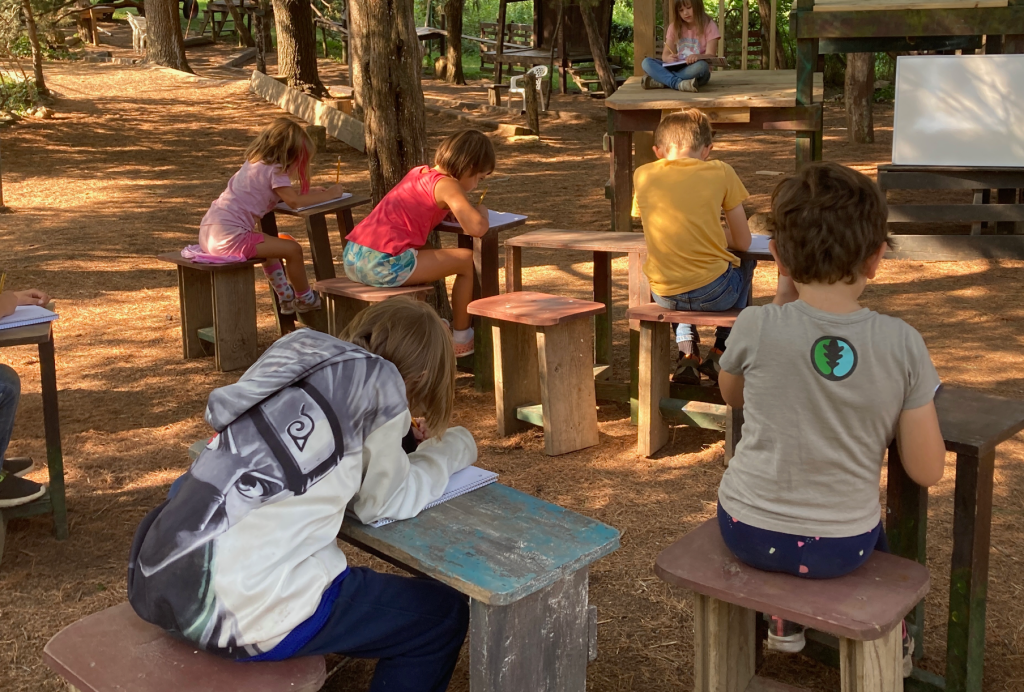
English and Spanish instructional methods include lecture with note taking, individual instruction, all class working in workbooks, small group projects, student presentations, role-playing, script writing, creating books, singing, making diagrams, and performance.
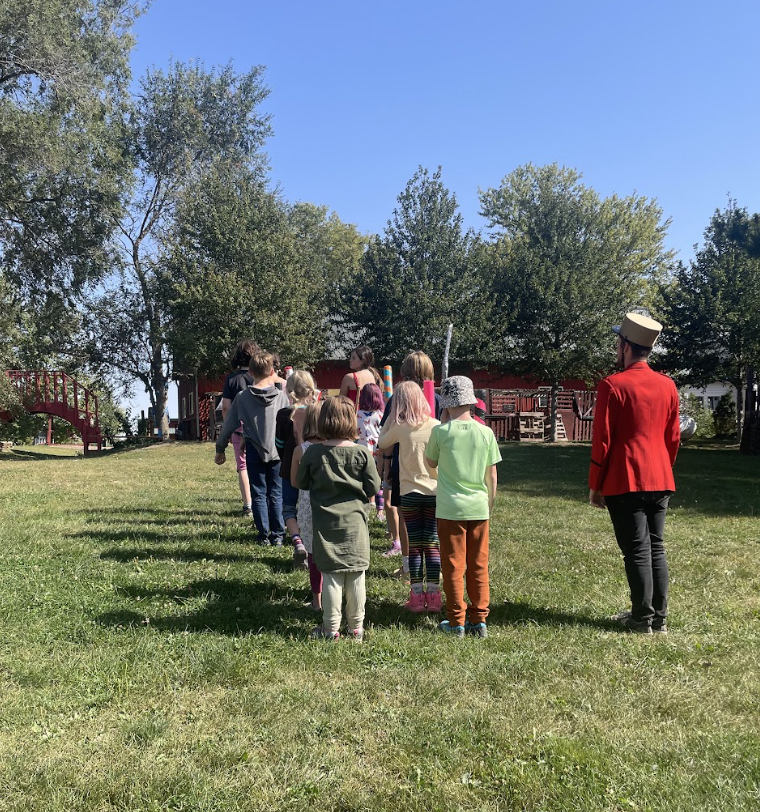
History is taught uniquely at The Country School. Teaching history through role-playing outdoors offers specific benefits for elementary students, including fostering creativity, enhanced engagement, active learning, and improved social skills.
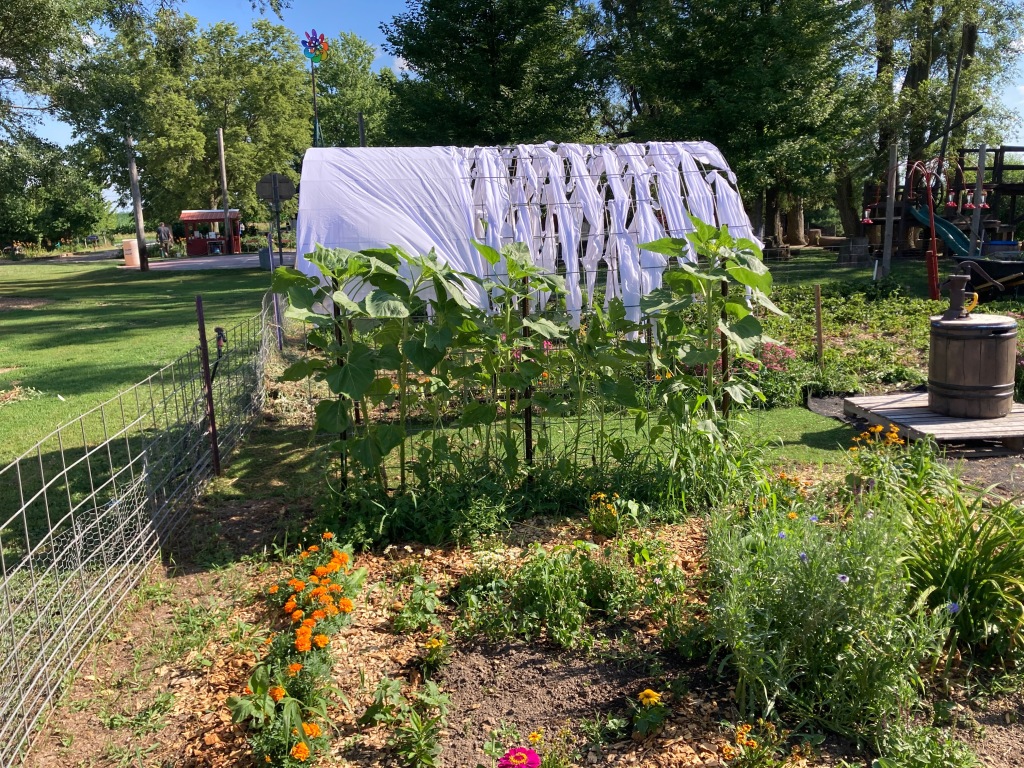
Students plant a garden in the spring and harvest vegetables in the fall. They also gather eggs for their small “market” visited by their families.
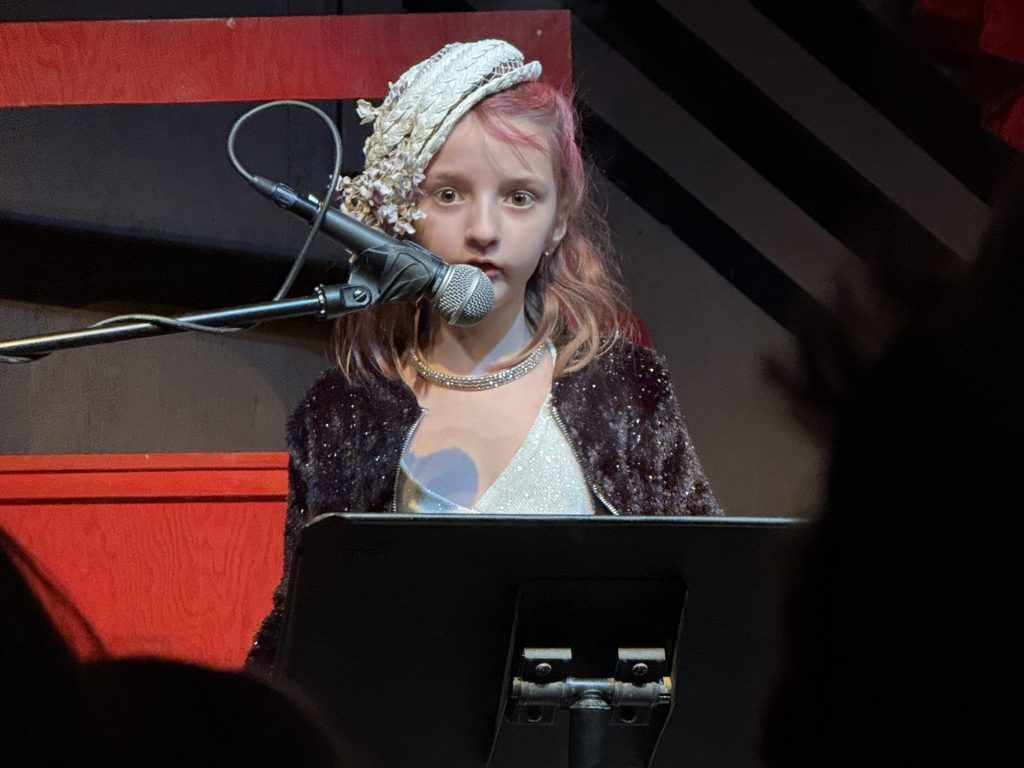
Engaging in performing arts offers children imaginative creative expression through voice and body. They learn and practice controlled expressions of emotion. Performing for an audience can significantly boost a child’s self-esteem. Overcoming anxiety and receiving positive feedback creates confidence.
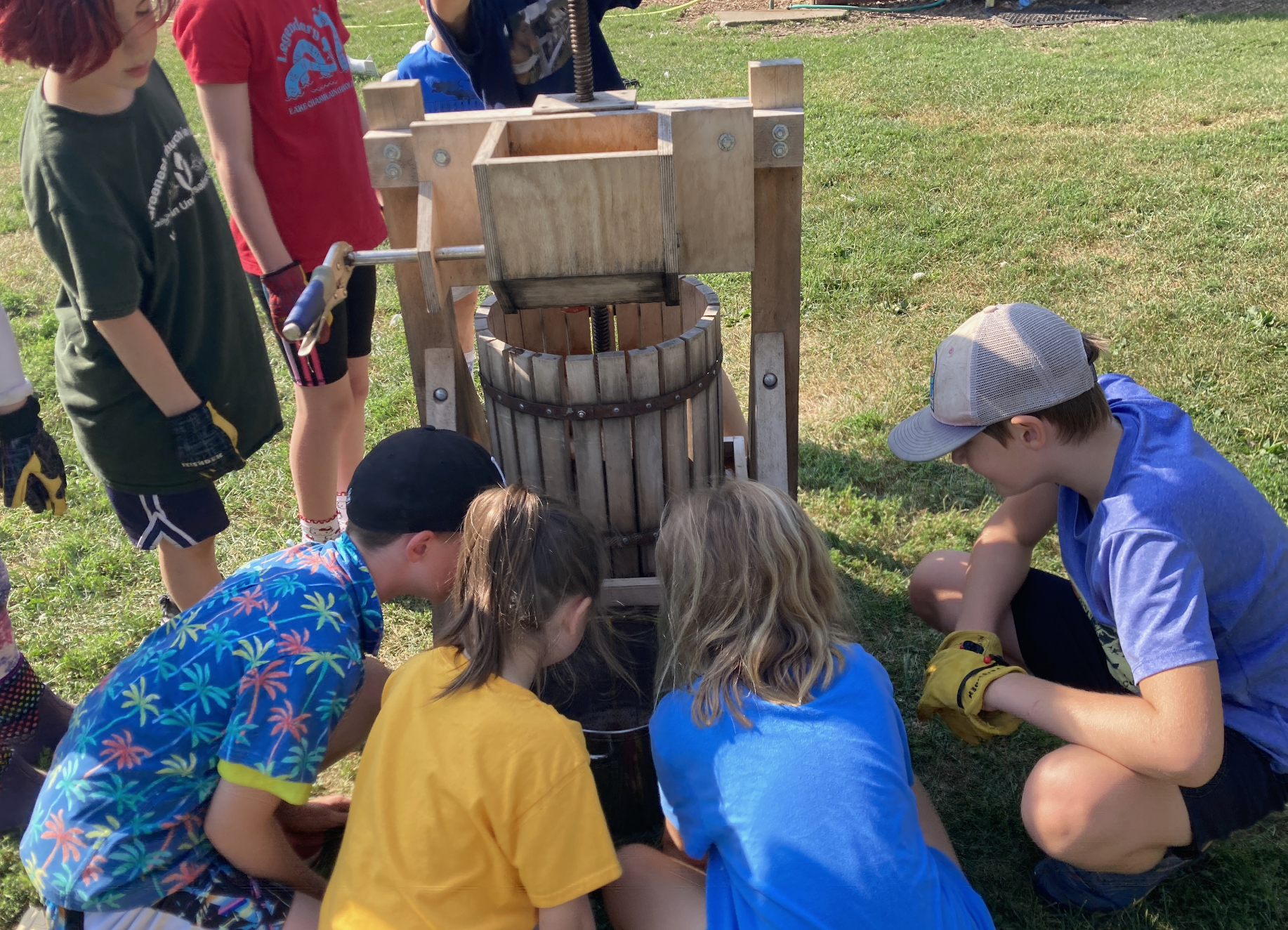
Our science curriculum integrates botany, biology, zoology, physical science, engineering, robotics, electricity, and chemistry. Students work collaboratively, and are encouraged to ask peers for help with problems.
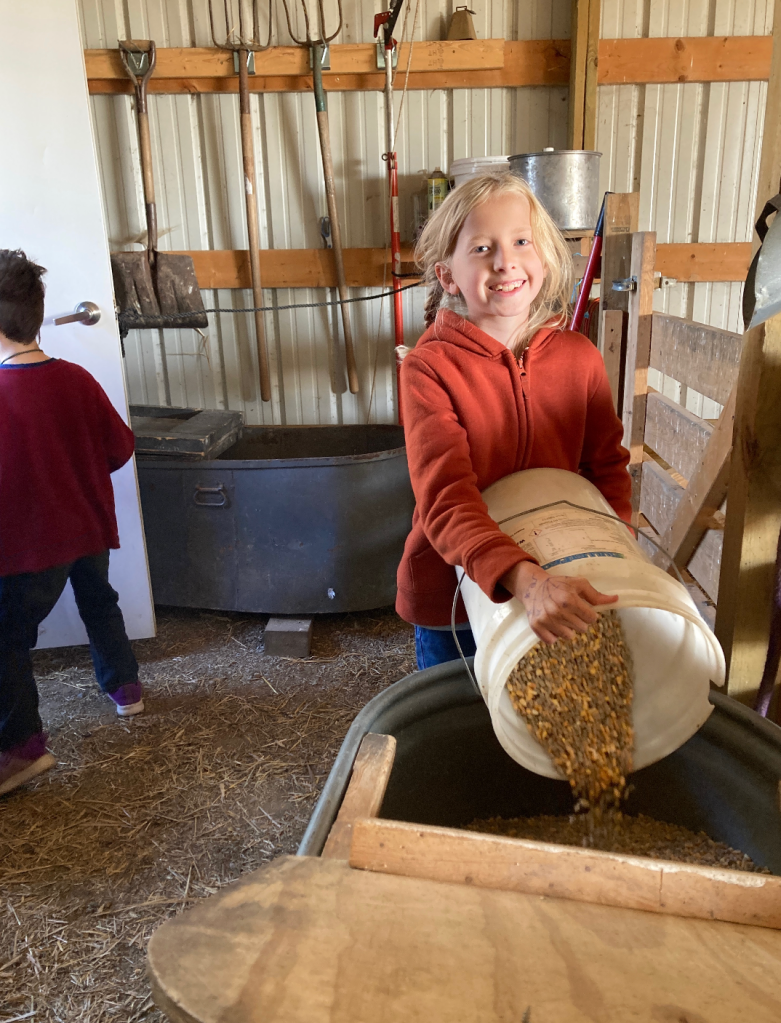
Students perform chores at the start of each day. This involves feeding, watering, and providing bedding for chickens, ducks, geese, pygmy goats, sheep, a Jersey milk cow (who sometimes requires milking), and dairy goats.
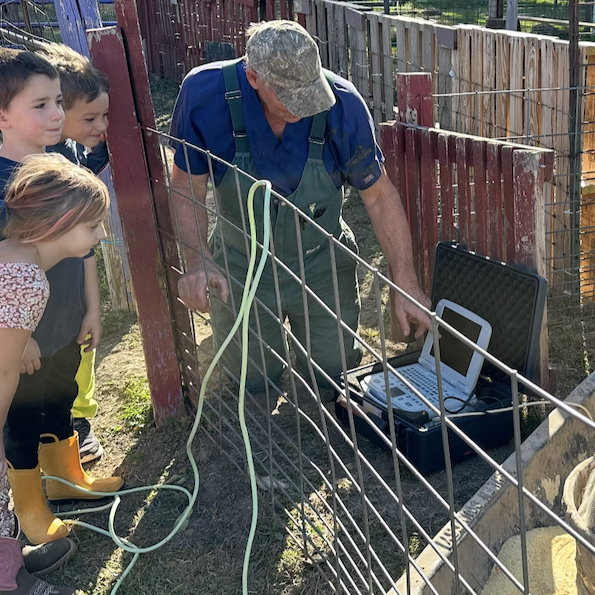
The Country School curriculum includes animal health and reproduction. Students observe lamb and goat births in the spring. A large animal veterinarian is on site three days a week and occasionally demonstrates more involved chores.
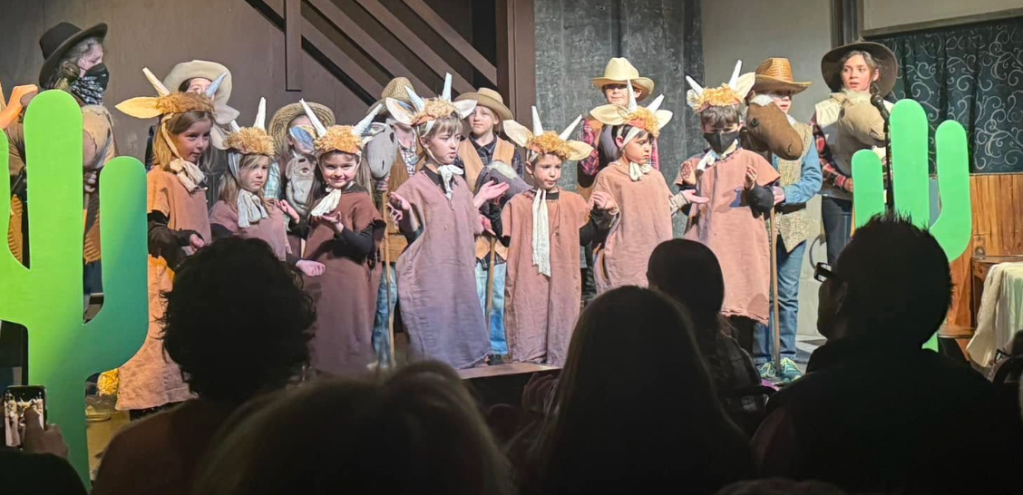
Performances at The Country School foster teamwork and collaboration. Students practice dialogue, listening, timing, pacing, and remaining still. Together they experience the delightful results of perseverance.
Educational Philosophy
Outdoor-Based Learning: Classes at The Country School are held outdoors. When colder temperatures (or rain) require indoor studies, students still spend significant time outdoors during free time and history/imagination time.
Child-Centered Education: Every child is unique and learns at their own pace. Our curriculum is designed to be flexible, allowing each student’s interests to guide their learning. We prioritize experiential, hands-on activities that resonate with each child’s innate curiosity.
Environmental Literacy: Students learn animal care and about their agricultural heritage. They also learn environmental principals and historic errors which diminished the natural world, while observing methods which implement preservation practices.
Critical Thinking: Our curriculum encourages problem-solving and inquiry-based learning, allowing students to ask questions, investigate, and draw conclusions based on their experiences.
Physical Wellness: Being outdoors promotes mental health as well as physical health. Performing chores improves coordination and playing group games offers appreciation for the outdoors in the varying seasons.
Social and Emotional Development: Students develop cooperation, empathy, and resilience through group activities and nature-based challenges, learning to navigate their emotions and interpersonal relationships. Part of each day is spent discussing issues that arise during their interactions.
The Country School is dedicated to creating a supportive learning environment that empowers students to connect with nature and one other. By fostering curiosity and both animal and environmental stewardship, we aim to develop compassionate and knowledgeable individuals who will contribute positively to their communities and the world.
 The Country School